
Narrative and Nourishment
Inside the mRb Fall 2025 Launch
Ever since I moved to Montreal, I’ve made a habit of collecting newspapers and magazines that catch my eye whenever I’m browsing bookstores in the city. My collection has grown to include a wide range of publications over the years—but the one that started my love affair with local journals, and continues to feed it three times a year, is the Montreal Review of Books (mRb).
I first discovered it on the stands of a local bookstore during my first year of university, and it served as my formal introduction to the world of English-language literature in Quebec. Since then, I’ve been able to identify mRb’s triannual print issues from a mile away, characterised by brightly illustrated front covers that often draw on familiar images from Montreal itself. This year, I had the opportunity to attend the launch event for mRb’s Fall 2025 issue and take a peek behind the curtains of one of my favourite journals in the city.
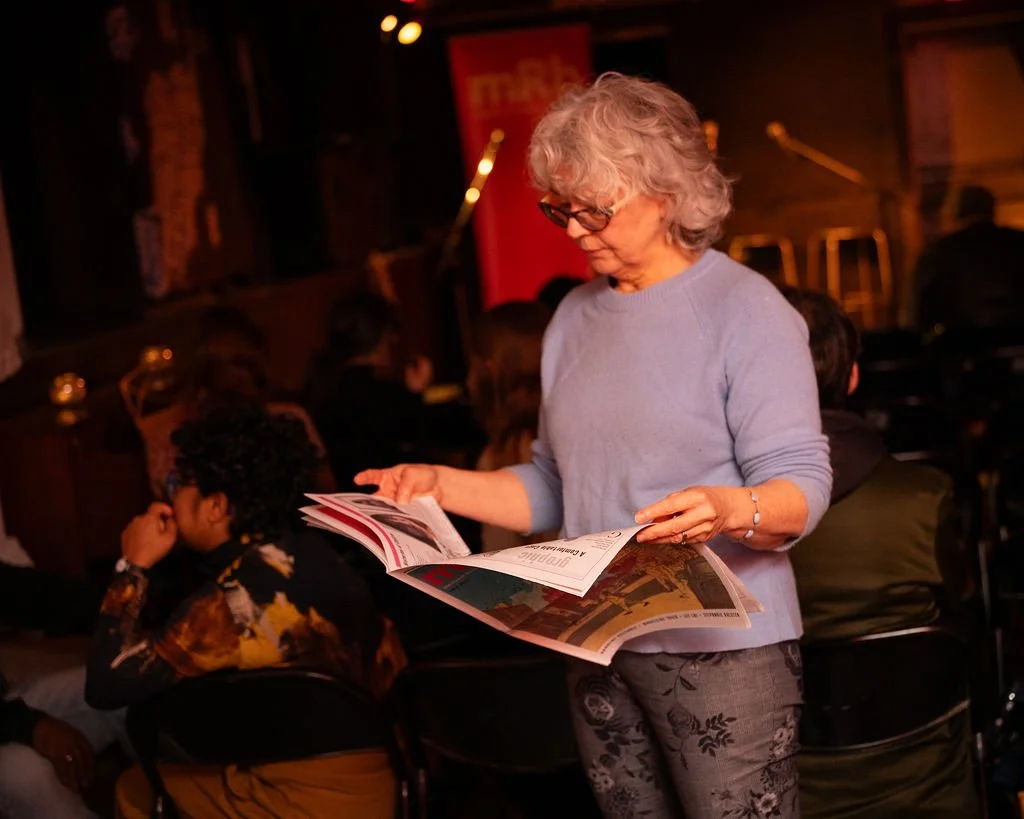
As I stepped into Le P’tit Ours on a soggy October evening, I was immediately welcomed by warmth and several fresh piles of the newest mRb. The Fall 2025 issue is stacked with impressive features—including Canadian icon Madeleine Thien and Montreal’s own Andreas Kessaris—and I thumbed through the pages under dim lighting while waiting for the panel to start.
Rebecca West, publisher of the Montreal Review of Books, took to the stage to open with a few words of gratitude for the team behind the issue. She thanked the editors, Malcolm Fraser and Priscilla Joly, before inviting Malcolm up on stage to introduce the first author on the panel and kickstart the readings.
Born to Greek immigrants in Montreal, Andreas Kessaris grew up in Parc-Extension, a setting that defined his childhood and led him to write two books set in the neighbourhood. His second memoir, The Grand Tour of Park Ex, invites the reader into his world through a collection of personal essays that span from his early years to young adulthood.
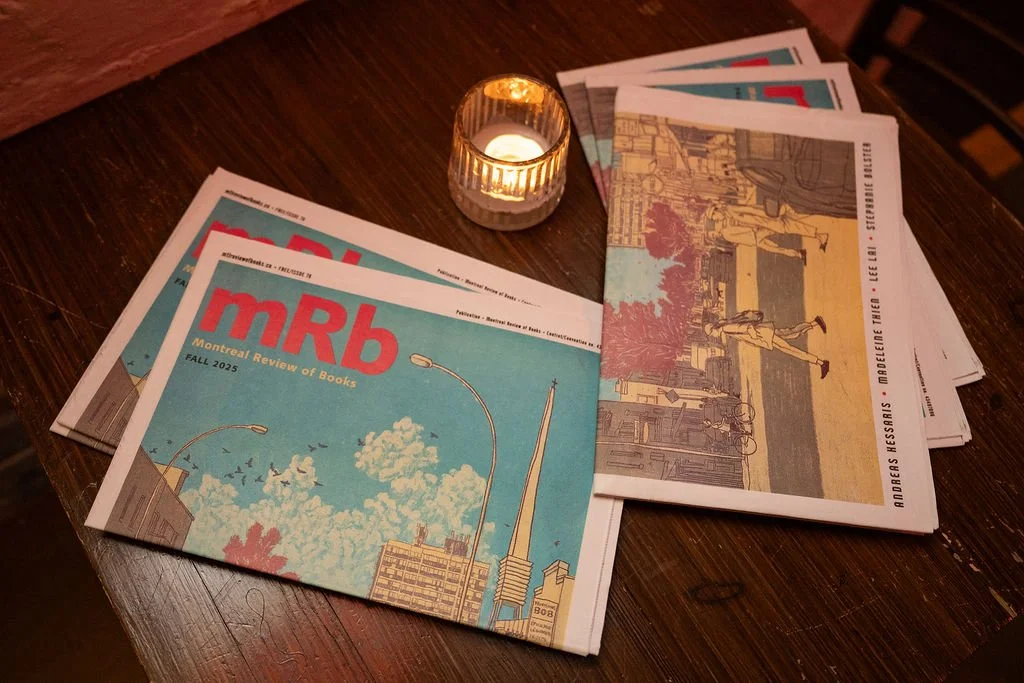


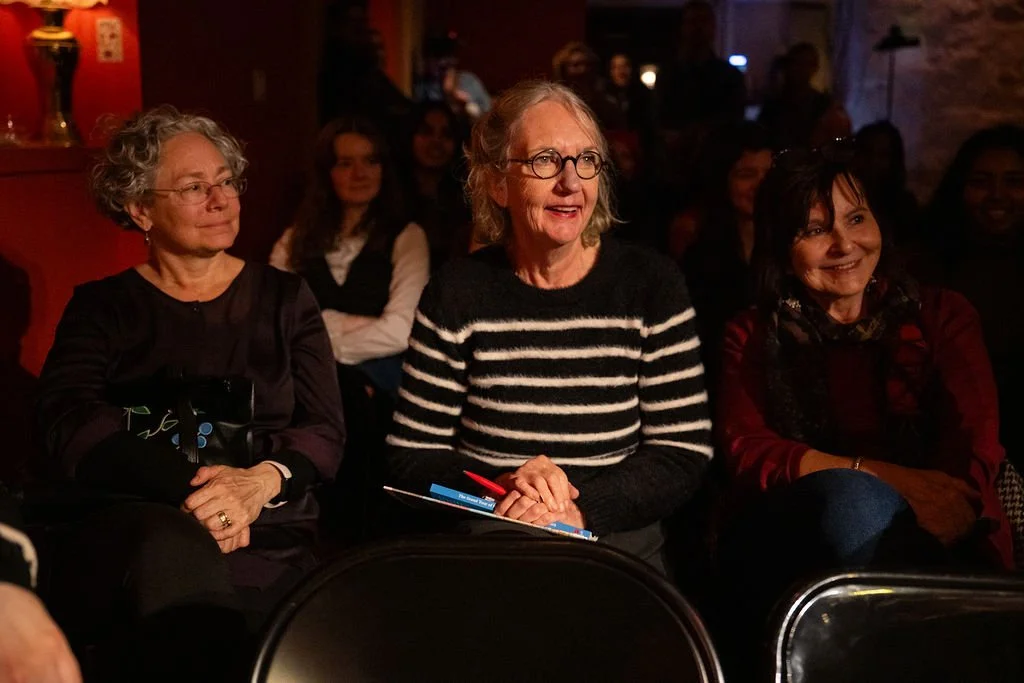


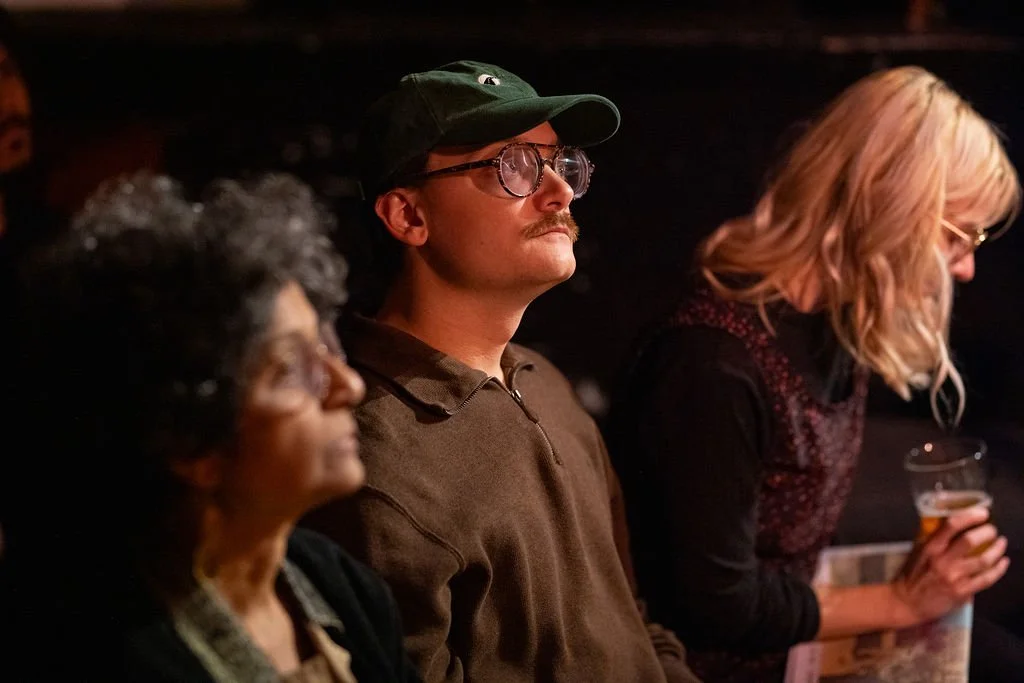
“I was in Toronto on Saturday to launch the book, and it’s funny because I had to explain what Parc-Extension was,” Kessaris shared, laughing along with the audience. He then drew our attention to the cover of this season’s issue, an artfully rendered depiction of Parc Ex, explaining that the artist had by coincidence chosen the exact intersection that he lived on for 14 years. “I used to get off the bus right here!” he said, pointing at the bus stop on the cover.
Kessaris is a natural storyteller and gifted with impeccable comedic timing. He spoke freely, without censoring himself, introducing the excerpt that he would be reading from with the same wry tone that characterises his writing. “This is a story about what it’s like to have your teacher be your bully,” he said matter-of-factly. His colloquial writing style translates especially well when spoken aloud, and I found myself hanging on to every word as he read.
When asked about his love for comedy and where he gets his sense of humour, Kessaris credited shows like Monty Python and SNL that he grew up watching. “I tried to make my book like its own comedy variety show,” he explained. “I also had a really rough childhood, and my way of dealing with bad situations is to usually make jokes about it. [...] Finding the humour in these situations is what helped me survive.”
The next author on the panel takes us far away from Montreal—Stephanie Bolster’s latest book of poetry, Long Exposure, flits from scenes in Chernobyl to New Orleans to Japan. The book initially began as an exploration of Robert Polidori’s disaster photography from Chernobyl’s Zone of Exclusion and post-Katrina New Orleans, before extending inwards and outwards. “The project just kept sprawling in all directions,” Bolster shared. “I did start with the Polidori photographs, but then I started asking: what constitutes a natural disaster? What is a human disaster? How do those things intersect?”
These questions of mortality and vulnerability underscore the entire book. Bolster uses a fragmentary mode of writing, snippets of poetry interspersed with asides or interruptions from different voices, which creates a poetic world defined by invisible tensions. She read out excerpts from a few different sections in order to give the audience a well-balanced taste of the wide range of material covered in Long Exposure, starting with the New Orleans levees in 2005 and ending with a piece juxtaposing Expo 86 in Vancouver against the Chernobyl disaster.


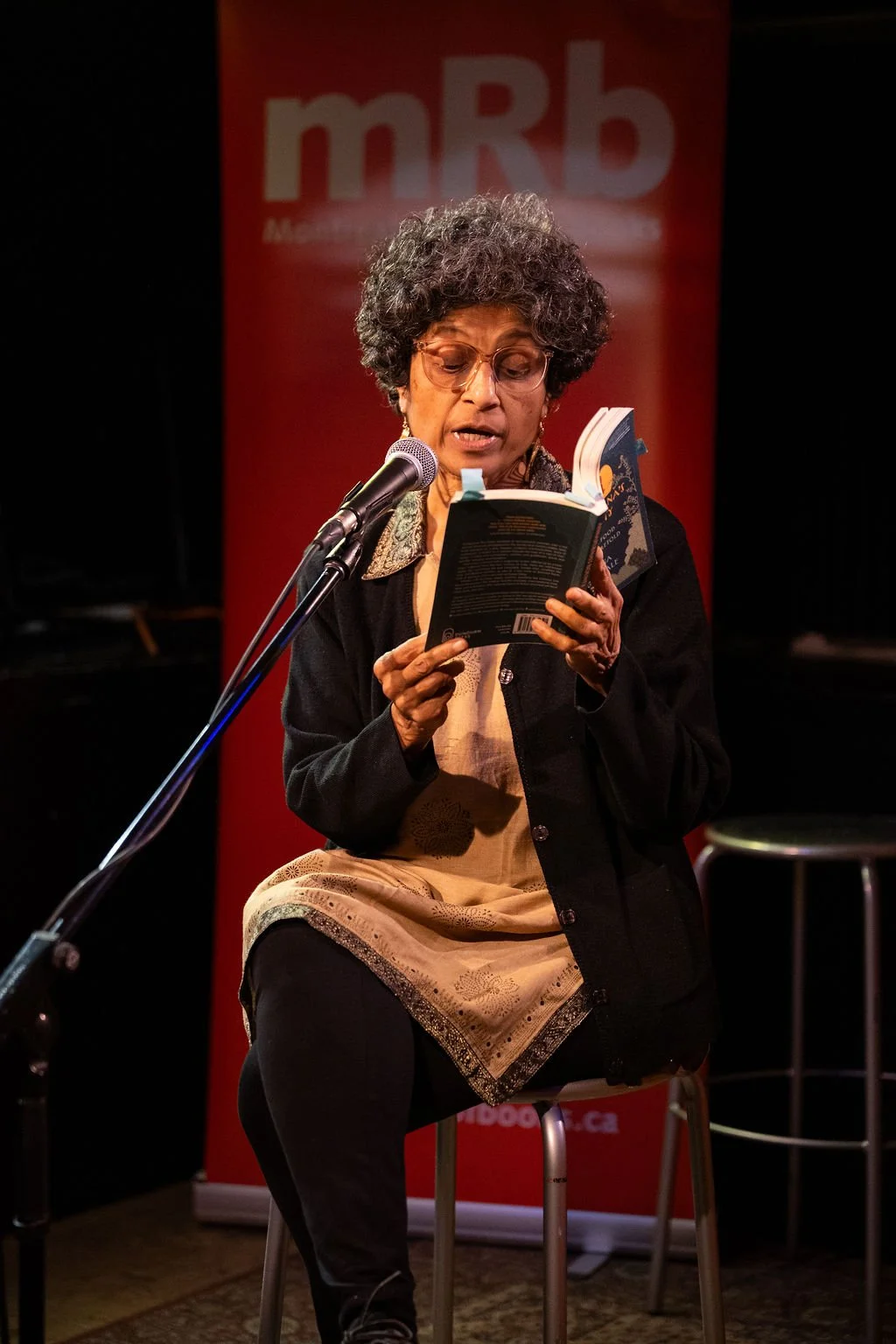

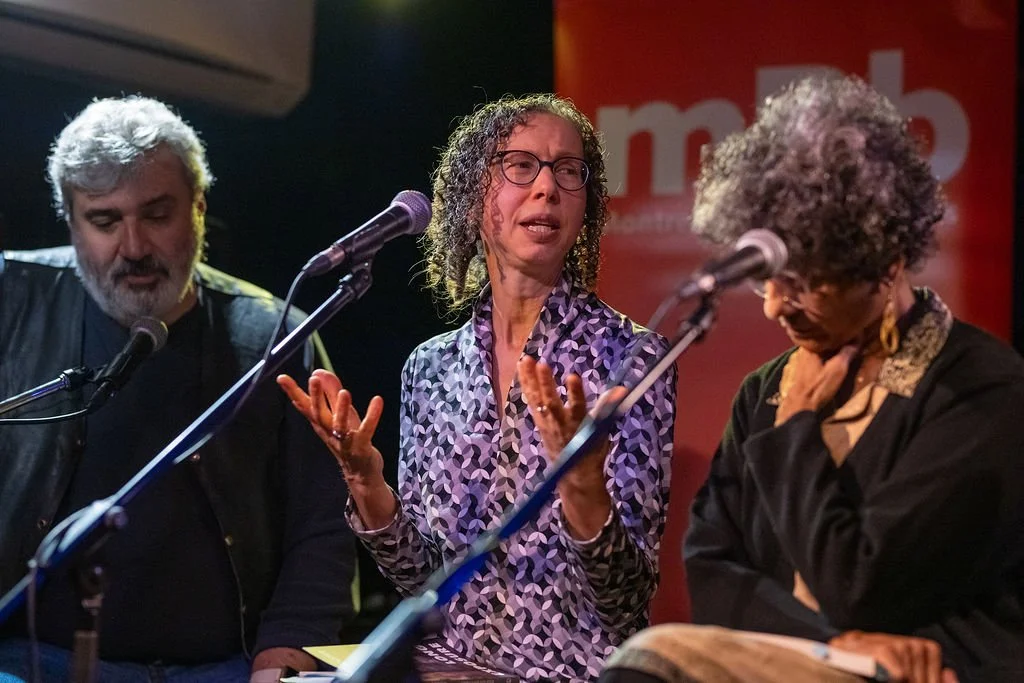
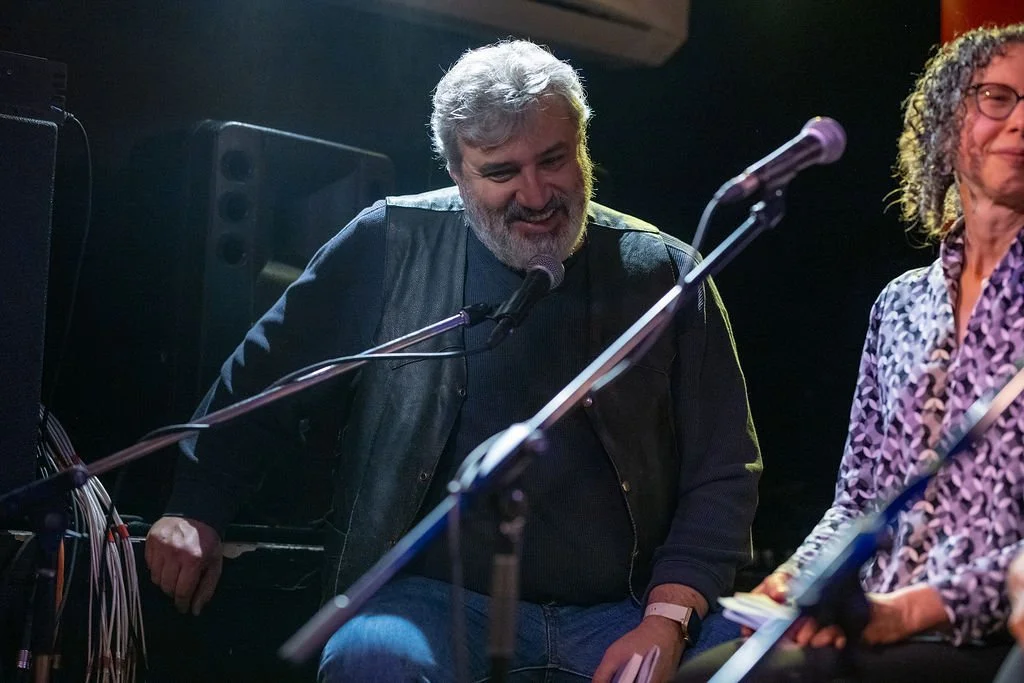
“‘If everything’s important, nothing is,’ he says. ‘Everything’s important,’ she says.” Bolster reads out these words from another fragment, which I felt succinctly encapsulated the project of her work. The book features a chorus of voices and varying perspectives, all overlapping without drowning each other out. “I landed in a very swampy place [with all these conflicting feelings],” said Bolster. “I don’t think of it so much as making art out of this terrible experience, it’s more responding to that experience in a way that can feel potentially productive or hopeful.”
Diverse narratives and multi-layered stories also take center stage in Veena Gokhale’s newest short story collection, Annapurna’s Bounty: Indian Food Legends Retold. Annapurna is the name given to the Indian goddess of nourishment, and all stories in the book feature food as its principal motif or driving force. Each story is paired with a corresponding recipe, taking inspiration from different facets of Indian culture and bending the genre constraints that are typically associated with story collections.
“As I said earlier, I’m a shape shifter,” Gokhale explained, when asked about how this project came to fruition. “One of the things I ended up doing in the past was giving Indian vegetarian cooking classes. [...] While I was giving these classes, I became very drawn to narratives. My passion is narrative. So I just started writing. That’s how this book came about.”
To best highlight the range in these food narratives, Gokhale read from two wildly contrasting short stories. “The Fisherman and the Sorceress” centers around the failure of the main character as he struggles to catch fish, using the lack of food to depict poverty and desperation; this is conversely followed by “Parvati Bai and the Bandits,” a story about plenty. Through rich, visually-immersive descriptions and evocative imagery, Gokhale takes the reader on a journey across different walks of life from all four corners of India.
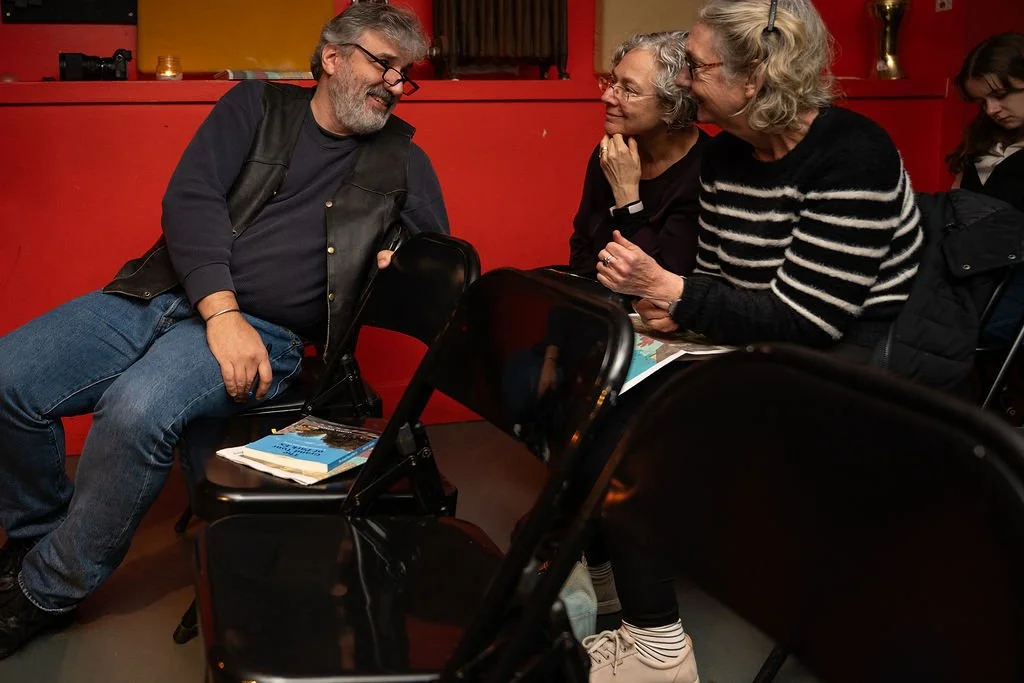
Each author brought with them a distinctly unique voice to this panel, highlighting the diversity that exists within our local literature. This is ultimately mRb’s main goal, to provide a platform that allows Montreal’s literary community to thrive under the spotlight and celebrate the differences that exist within it. Though it might seem like these three works would target completely different audiences at first glance, it’s clear that everyone in the room is united by one simple fact: a love for books and Montreal.
For more information about the Montreal Review of Books, visit their website.
Event photos provided by Daniel Haber.
